Websites & branding
Web design for the page people decide on.
Identity, messaging and the site all of it lands on. Below are three rebuilds, four pages between them, every one shown before and after, top to bottom, with nothing cropped out.
The words changed, not just the look.
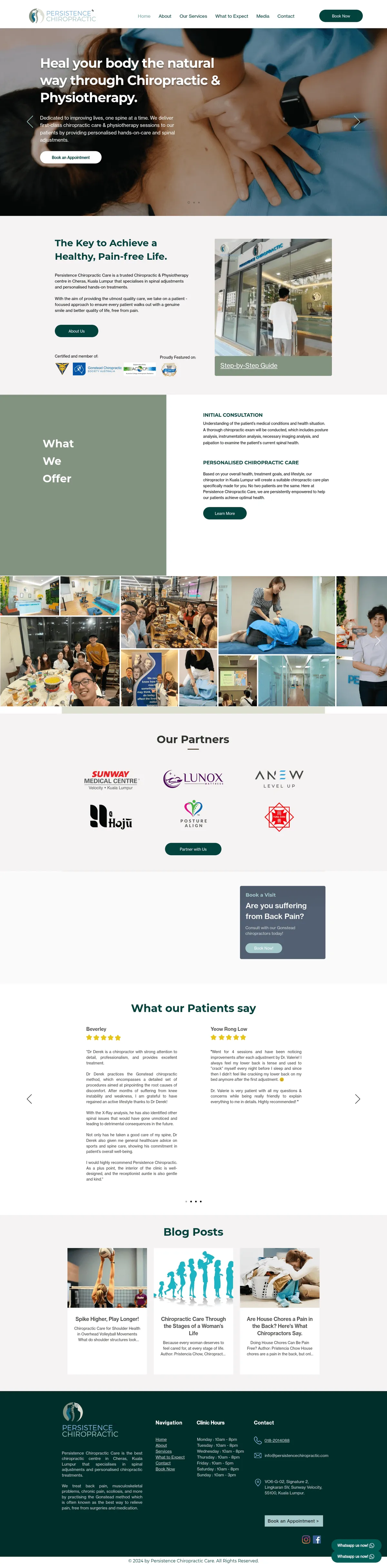
A Gonstead chiropractic and physiotherapy clinic in Cheras, rebuilt from a template site into one that says where it is, who works there and what it treats.

Sometimes the words are already right.
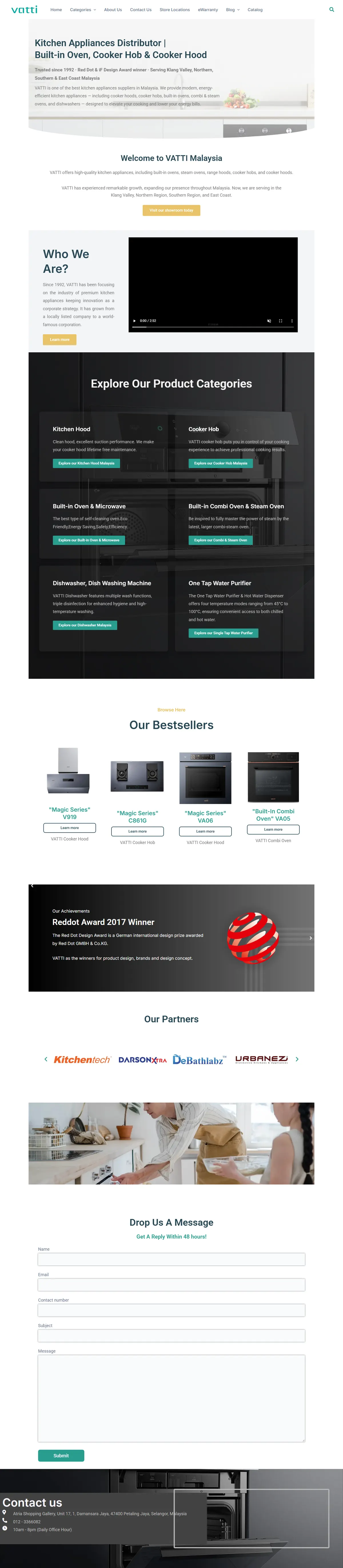
A kitchen appliance brand's site rebuilt on the same addresses and the same copy. The search work had already been done here, so the job was everything else: the home page and all five category pages, end to end. Two of them are below.
Home page

Kitchen hoods


People arrive with a problem, not a treatment name.
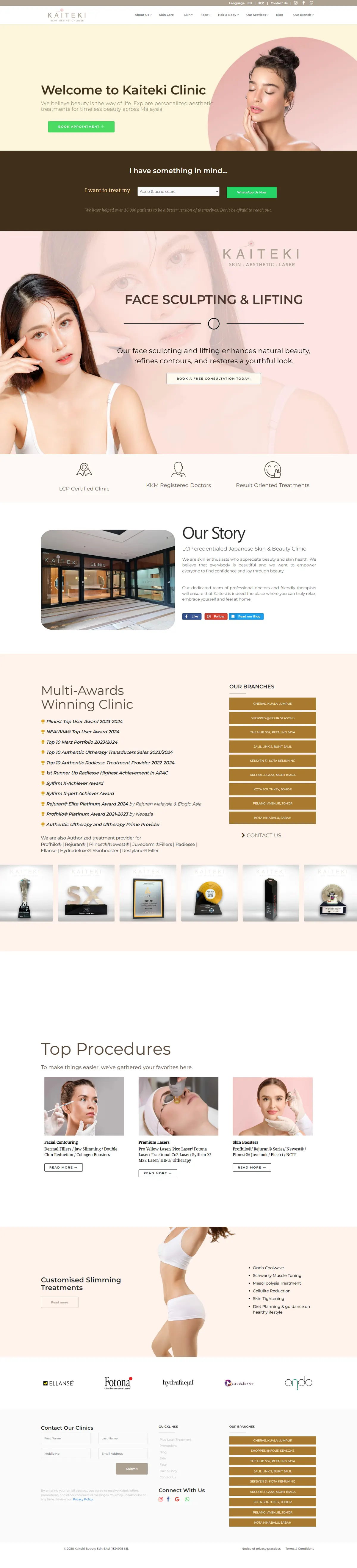
A nine-branch aesthetic clinic whose old site was a hand-built static one, a separate HTML file per treatment. Rebuilt around the thing a patient actually arrives with, which is a concern rather than a treatment name.

The brand is whatever the page makes people think.
A logo, a palette and a set of rules are worth having, and we do that work. But almost nobody ever sees them on their own. They see one page, at eleven at night, on a phone, deciding whether a stranger should be allowed near their spine. That page is the brand, and everything else is how it stays consistent.
Which is why a rebrand that stops at the logo tends not to change anything. The visitor was never confused about the colours. She was trying to find out where you are, who works there, whether they are registered, what you would do to her on the first visit, and how to ask a question without filling in a form.
Looking good is one of three jobs.
A site earns its keep when three things are true at the same time. Most are built by people who do one of them, and the two that are absent go unnoticed until the enquiries do not come.
It has to look like the safe choice
A stranger decides whether you are credible before reading a word, on a phone, usually at night. That judgement is design doing its job, and it is the half most people mean by a website. On its own it produces a site that gets compliments and no enquiries.
It has to make the next step obvious
Every page is built around one thing to do next, put where the decision actually happens, with nothing standing between the reader and doing it. Conversion work, or CRO, is mostly the removal of reasons to hesitate. On its own it produces a page that converts the few people who happen to find it.
It has to be there when someone looks
The pages are built around what people actually type into Google, and built to stay fast and legible to a crawler long after launch. That is the SEO half, and it is the one that keeps paying. On its own it produces visitors who arrive, do not believe what they see, and go back.
Done together they have one job, and it is not decoration. Somebody looking for what you sell finds you, believes you, and sends the message.
A site is not finished when it looks finished.
Most of what is on the right-hand screens is there because of what happens after launch: the pages built around what people search for, the WhatsApp button that starts a real conversation, the booking, the hours, the reviews, the dealer map. We run that side too, so the site is built for the campaigns it will carry rather than handed over and wished well.
The same team that designs it runs the marketing that points at it.
WhatsApp +60 12-628 6586
Tell us where you’re
losing customers.
One message. We will tell you what we would do about it, and whether we are the right people to do it.